About Sixes & Nines
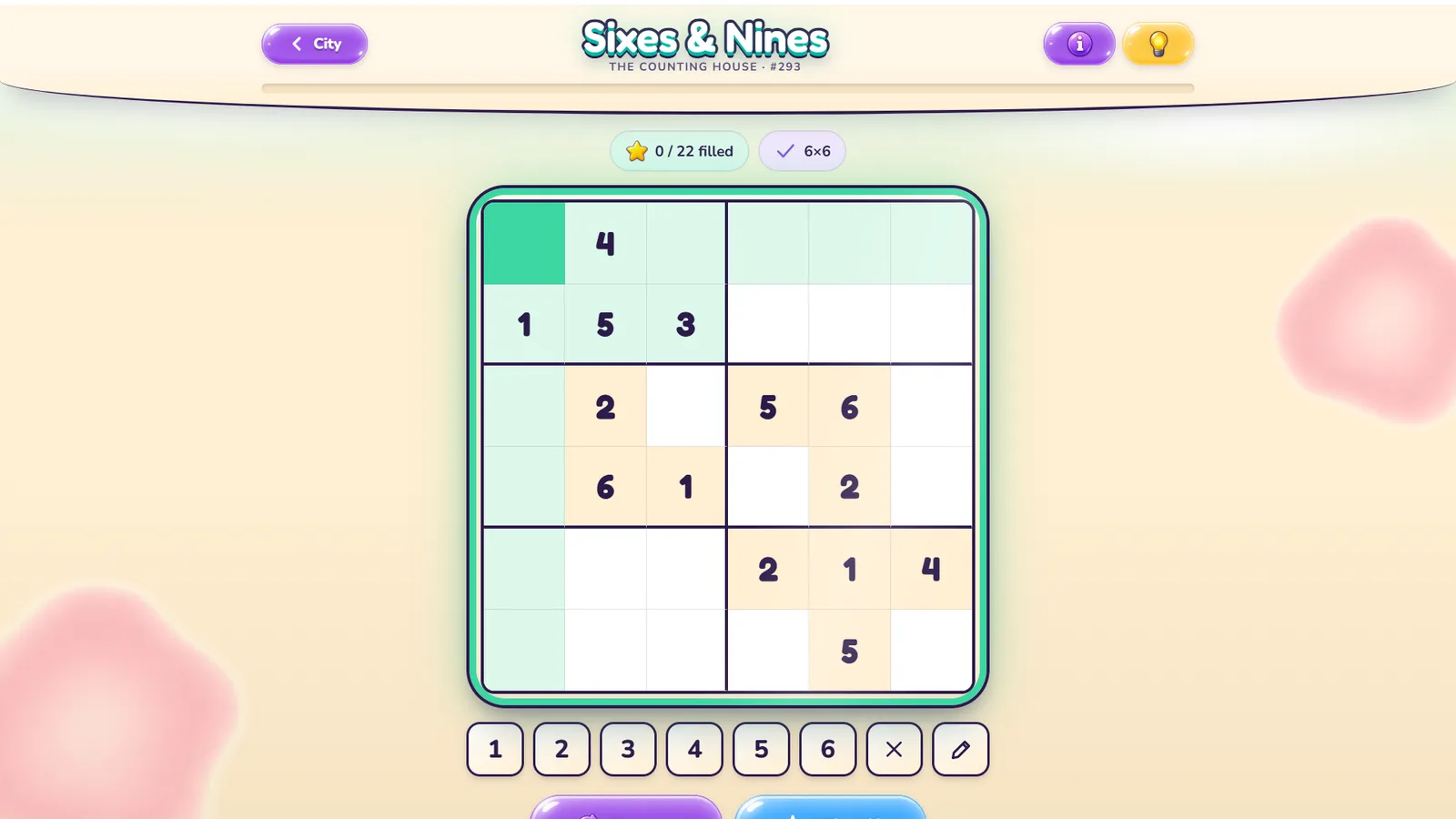
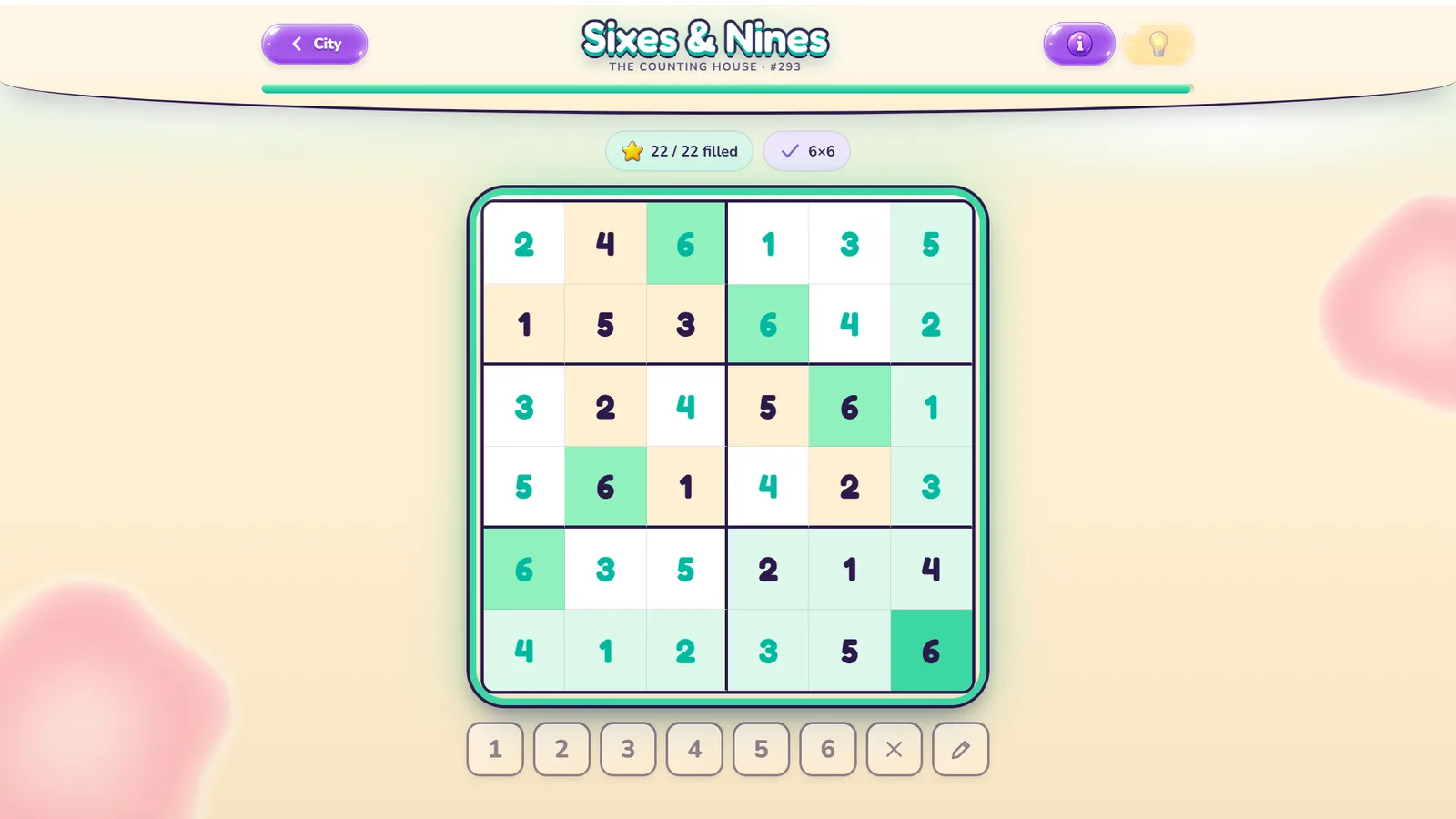
Sixes & Nines is a free daily number place puzzle: fill every empty square so that each row, each column and each box holds every number once. On Mondays and Tuesdays the board is 6 by 6, with boxes of two rows by three columns and the numbers 1 to 6; the rest of the week it is 9 by 9, with 1 to 9. Every board has exactly one answer, and reasoning alone reaches it.
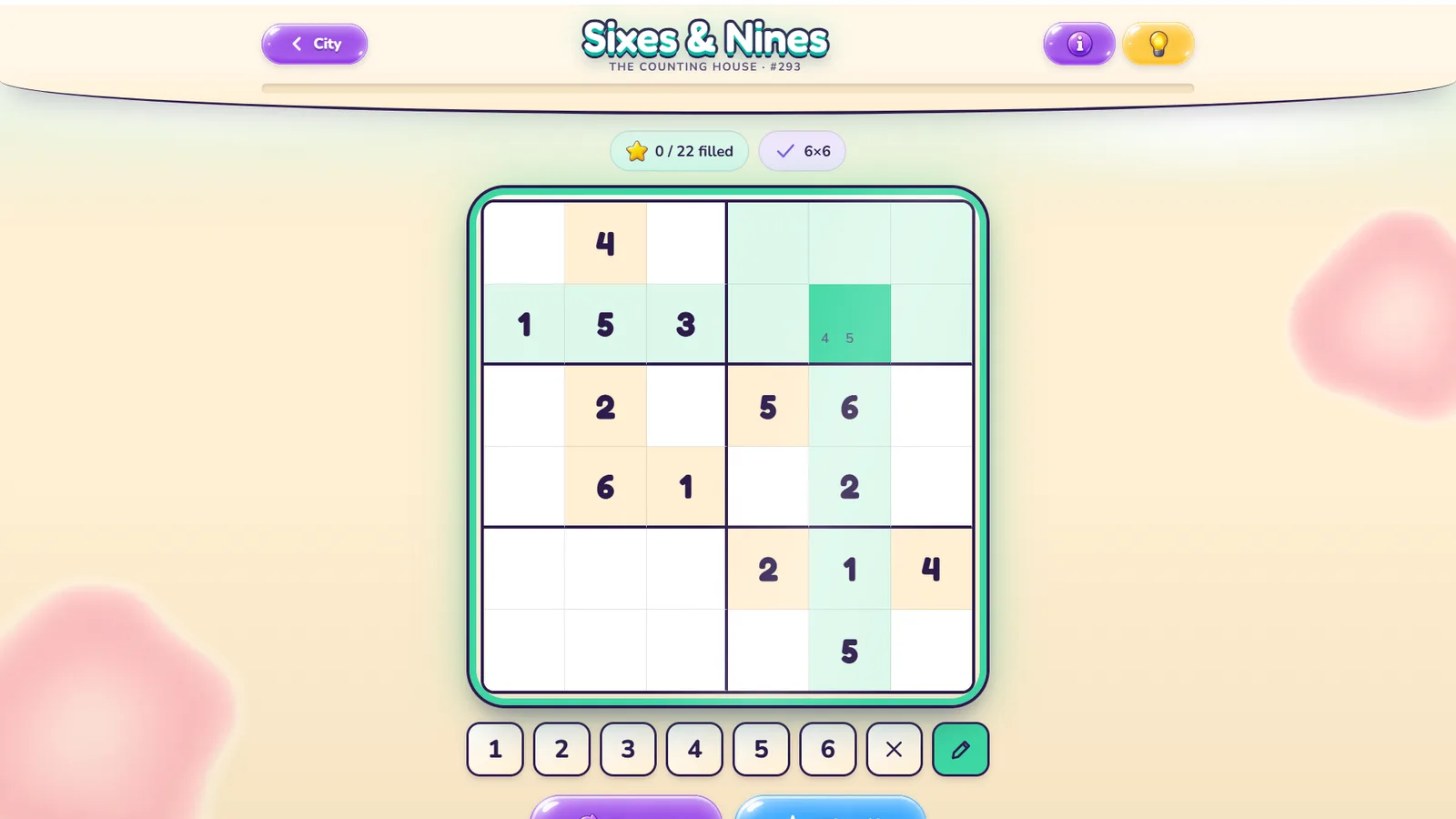
The week is a curve: the 6 by 6 and the midweek 9 by 9 fall to singles, a square with one number left or a number with one place left, and the weekend’s 9 by 9 gives fewer squares and needs the next step up, a number locked into one line of a box or a pair of squares that share two numbers. Tap a square and a number; the pencil turns the pad into small marks; a clash is marked in red at once, and writing a number clears it from the pencil marks it sees. A hint puts a wrong number right, or writes in the next number reasoning finds.
It needs no words, only the numbers, so it suits anyone who enjoys a classic logic grid with a coffee. A group made on the home page shares one link; nobody has to sign up, a browser can be in several groups, and one go at the day’s board counts in each of them. A board in progress stays in your browser, and signing in with an email code takes your results, streaks and residents to your other devices. Sixes & Nines plays by touch, mouse or keyboard on phones, tablets and computers.
- 6×6 on Mondays and Tuesdays, 9×9 the rest of the week
- Reasoning alone reaches every answer: never a guess
- Pencil marks that clear themselves as you write
- Clashes marked in red the moment they happen
- Exactly one answer, checked by a solver every day
- Every past board can be played again from the archive
How to play Sixes & Nines
If you like Sudoku, Sixes & Nines is the same kind of puzzle: fill the grid so every row, column and box holds each number once, on a 6 by 6 board early in the week and a 9 by 9 the rest.
- Fill the grid so every row, column and box holds each number once.
- Boards are 6 by 6, with the numbers 1 to 6, on Mondays and Tuesdays, and 9 by 9, with 1 to 9, the rest of the week.
- Tap a square, then a number. The pencil turns the numbers into small marks for what might go there.
- A number that clashes with another in its row, column or box is marked in red at once.
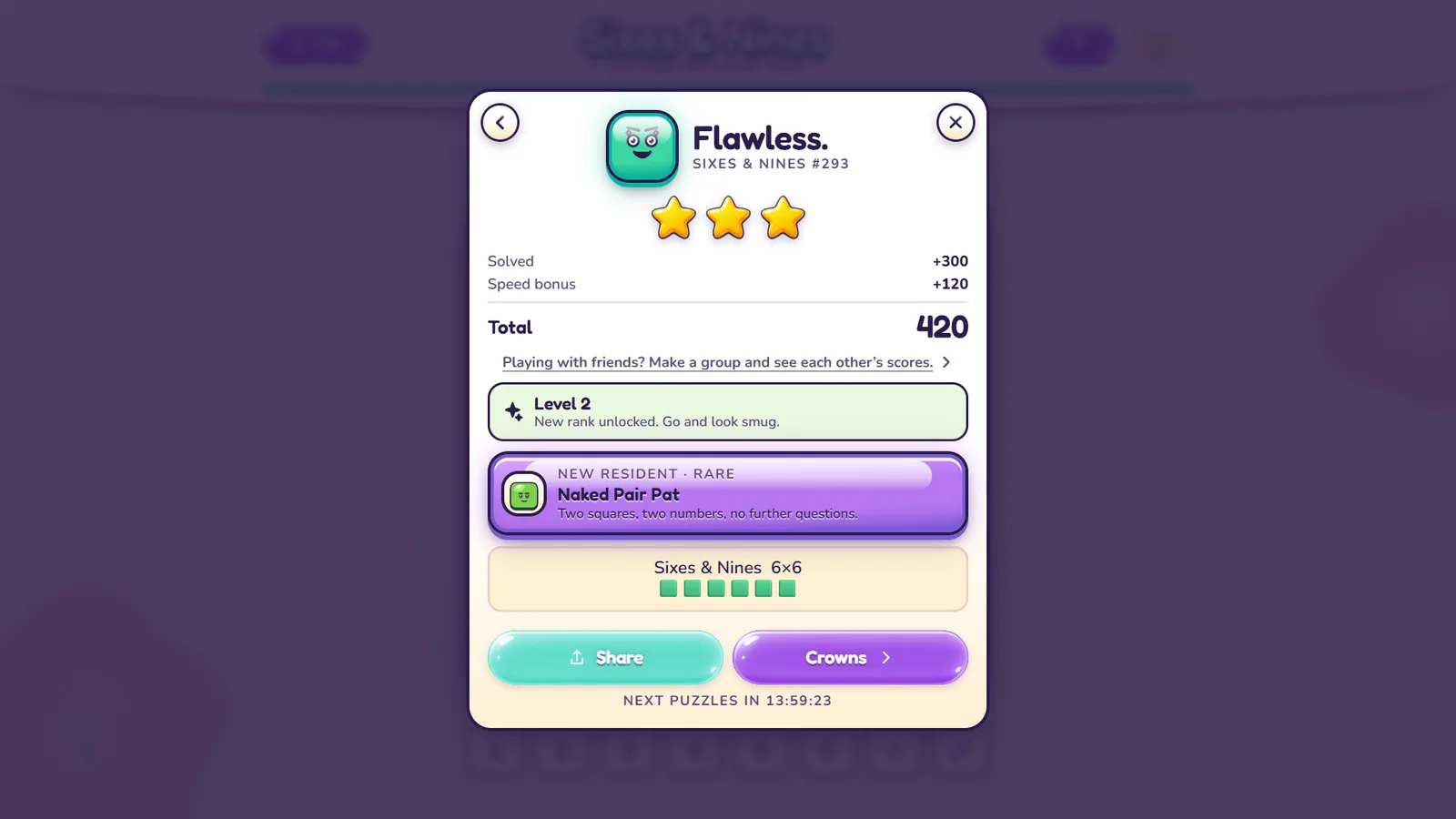
- Exactly one answer, and reasoning alone reaches it: never a guess. Solve it fast and unaided for three stars.
Based on: Number place (Latin squares with boxes) — public domain.
Questions about Sixes & Nines
What is Sixes & Nines?
Sixes & Nines is a free daily number place puzzle: fill every empty square so that each row, each column and each box holds every number once. On Mondays and Tuesdays the board is 6 by 6, with boxes of two rows by three columns and the numbers 1 to 6; the rest of the week it is 9 by 9, with 1 to 9. Every board has exactly one answer, and reasoning alone reaches it.
How long does Sixes & Nines take to play?
About 2 to 8 minutes a puzzle.
Is the Sixes & Nines video real gameplay?
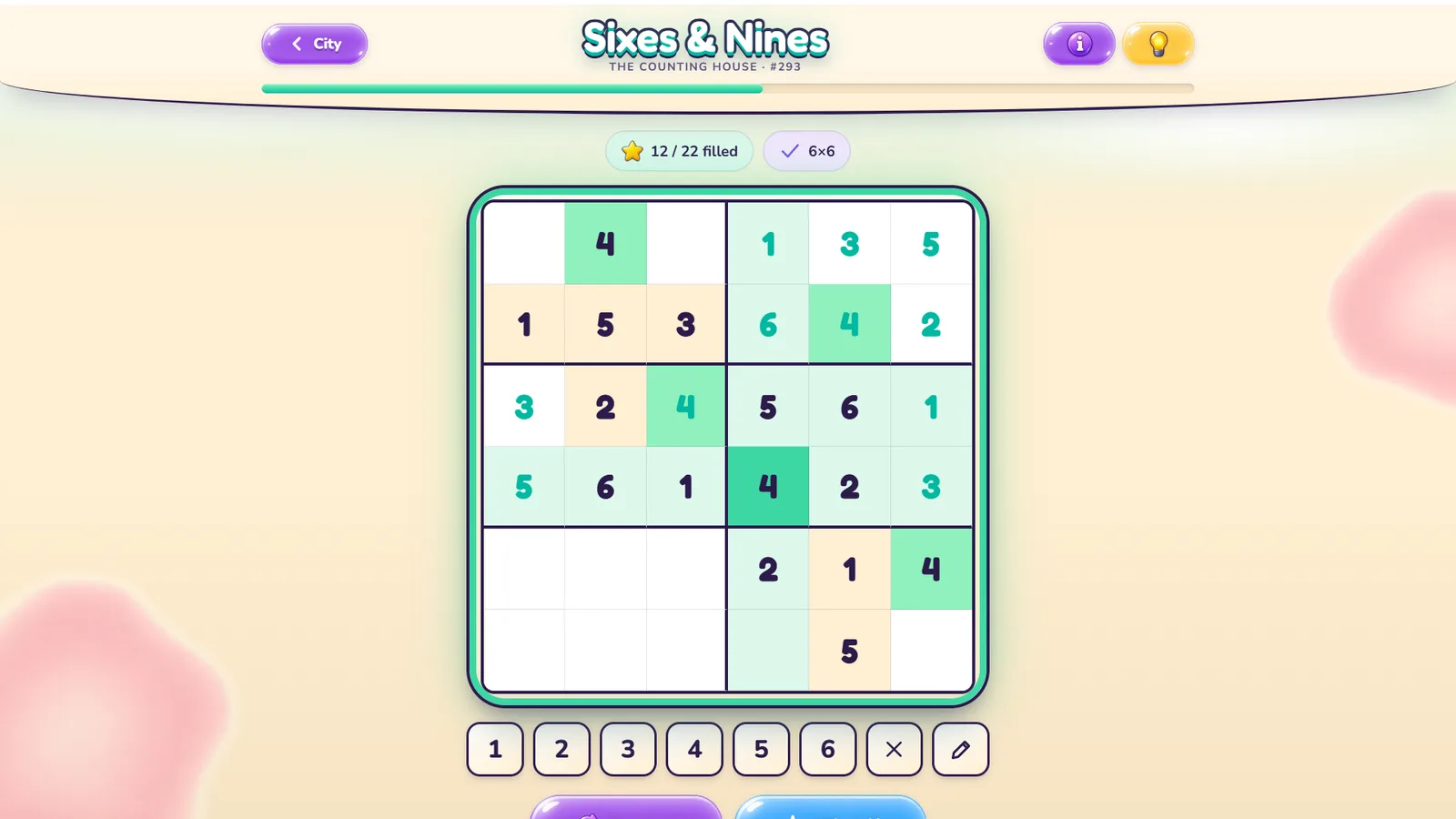
Yes. The video on this page is 0:37 of Sixes & Nines really being played, recorded from the game itself, played in a web browser with the same mouse and keys a player uses, and cut only to skip loading and waiting.
Is Sixes & Nines free?
Yes. Sixes & Nines is free, with no ads and no sign-up, and plays in your browser on a phone, a tablet or a computer. There is a new one every day at midnight, your time, and everyone gets the same puzzle.
Is Sixes & Nines like Sudoku?
Yes. Sixes & Nines is the same kind of puzzle: fill the grid so every row, column and box holds each number once, on a 6 by 6 board early in the week and a 9 by 9 the rest.
Can I play Sixes & Nines with friends?
Yes. Start a group on the home page and send its link; nobody needs an account. Everyone in the group gets the same Sixes & Nines each day, and once you have finished you see how the others did. You can be in several groups at once, and one go counts in all of them.
Can I play past Sixes & Nines puzzles?
Yes, as many as you like. Every past day of Sixes & Nines is in its archive, back to the first: the same board everyone got that day. A past puzzle counts for no streak and no group; only the day’s own does.
Other games named here belong to their owners. This site is not affiliated with any of them.