About World Quest
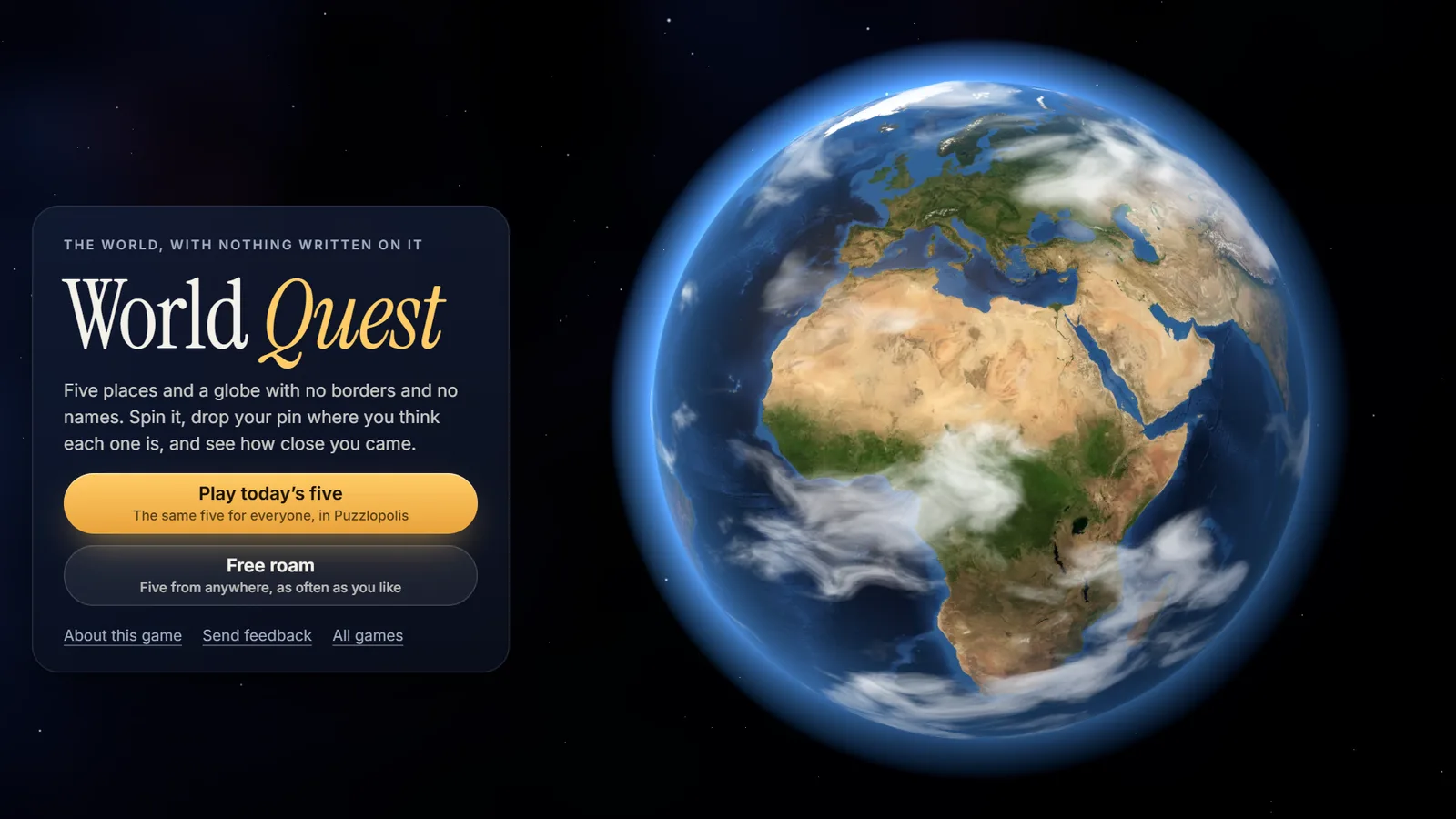
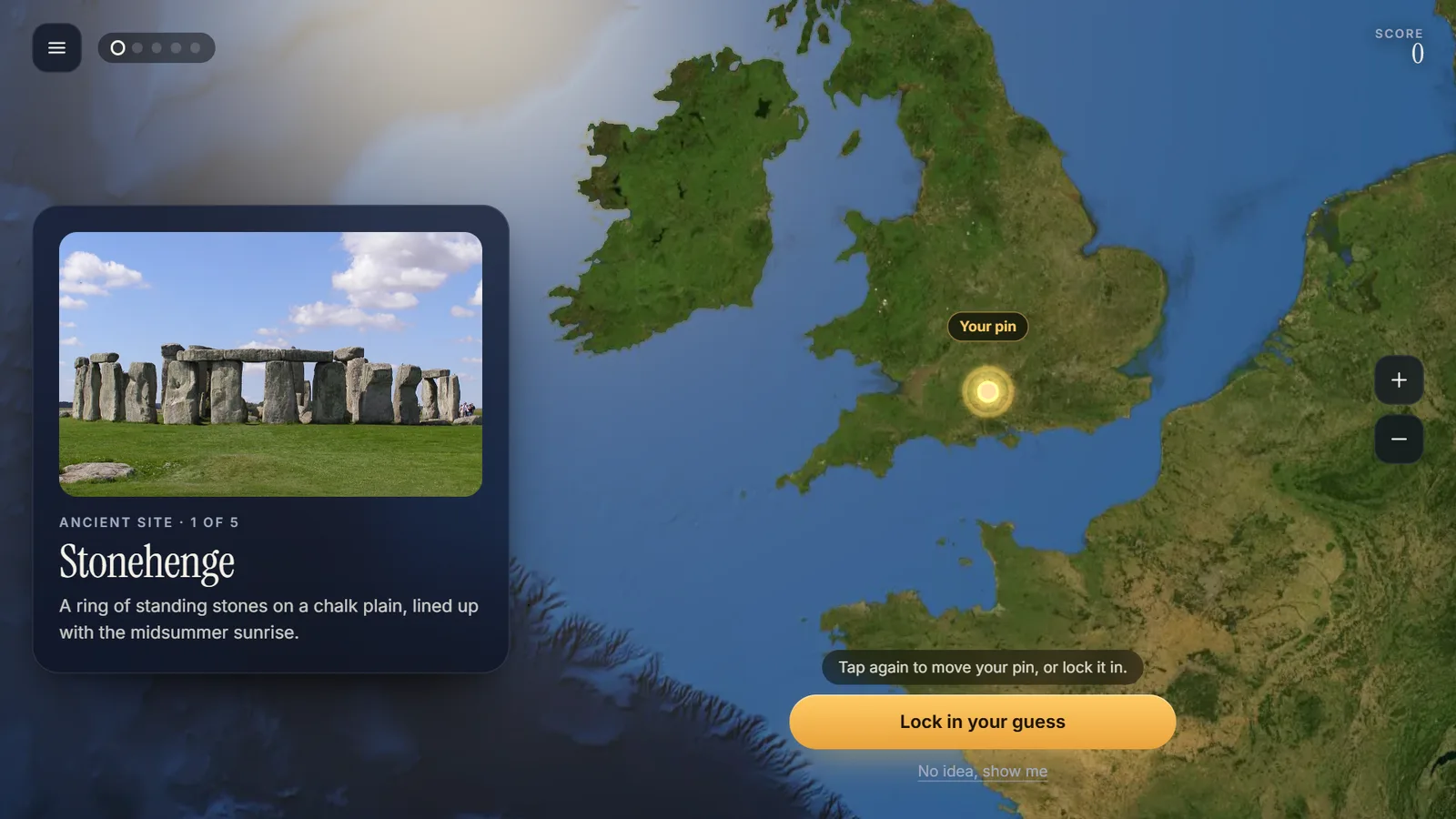
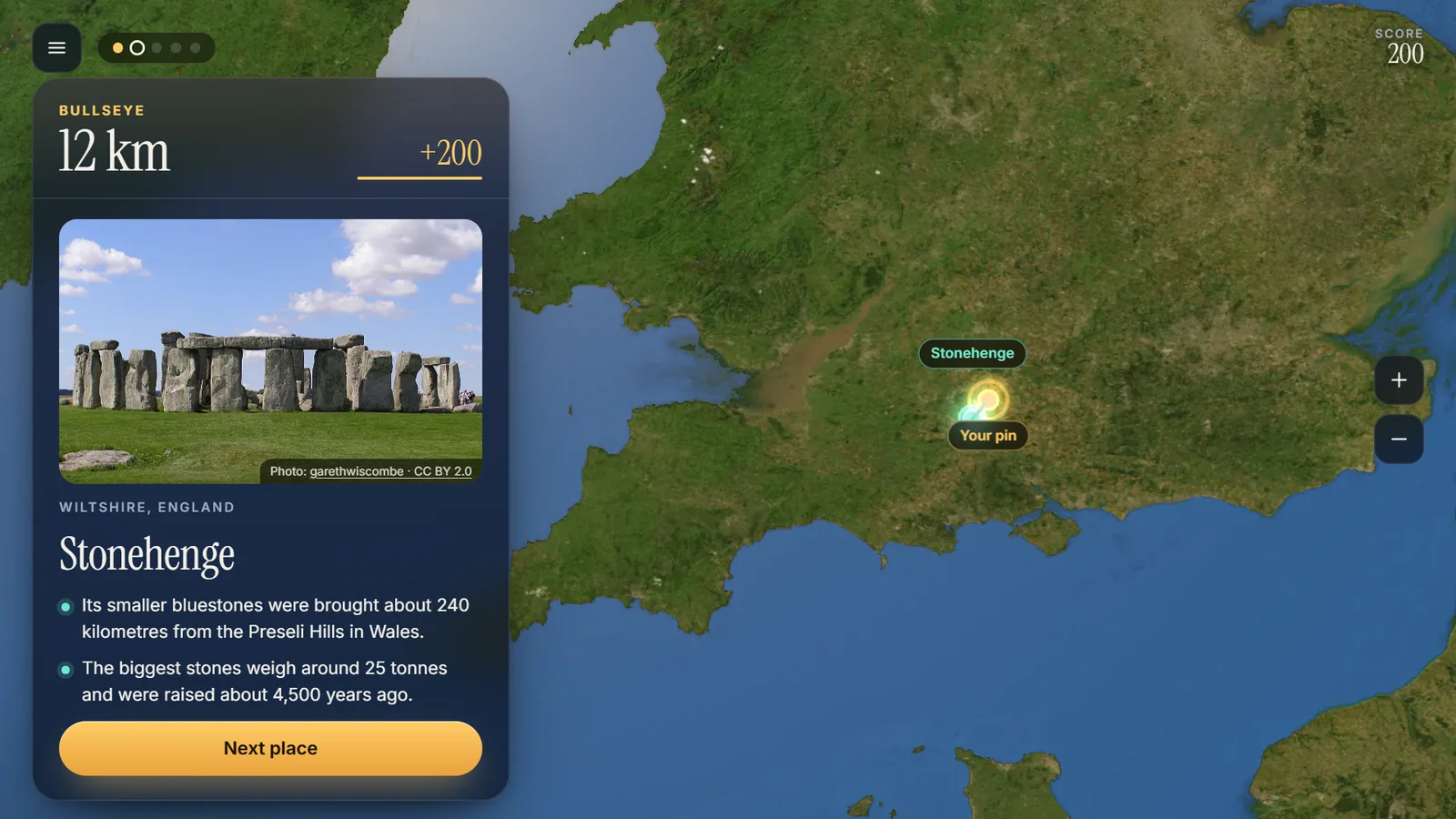
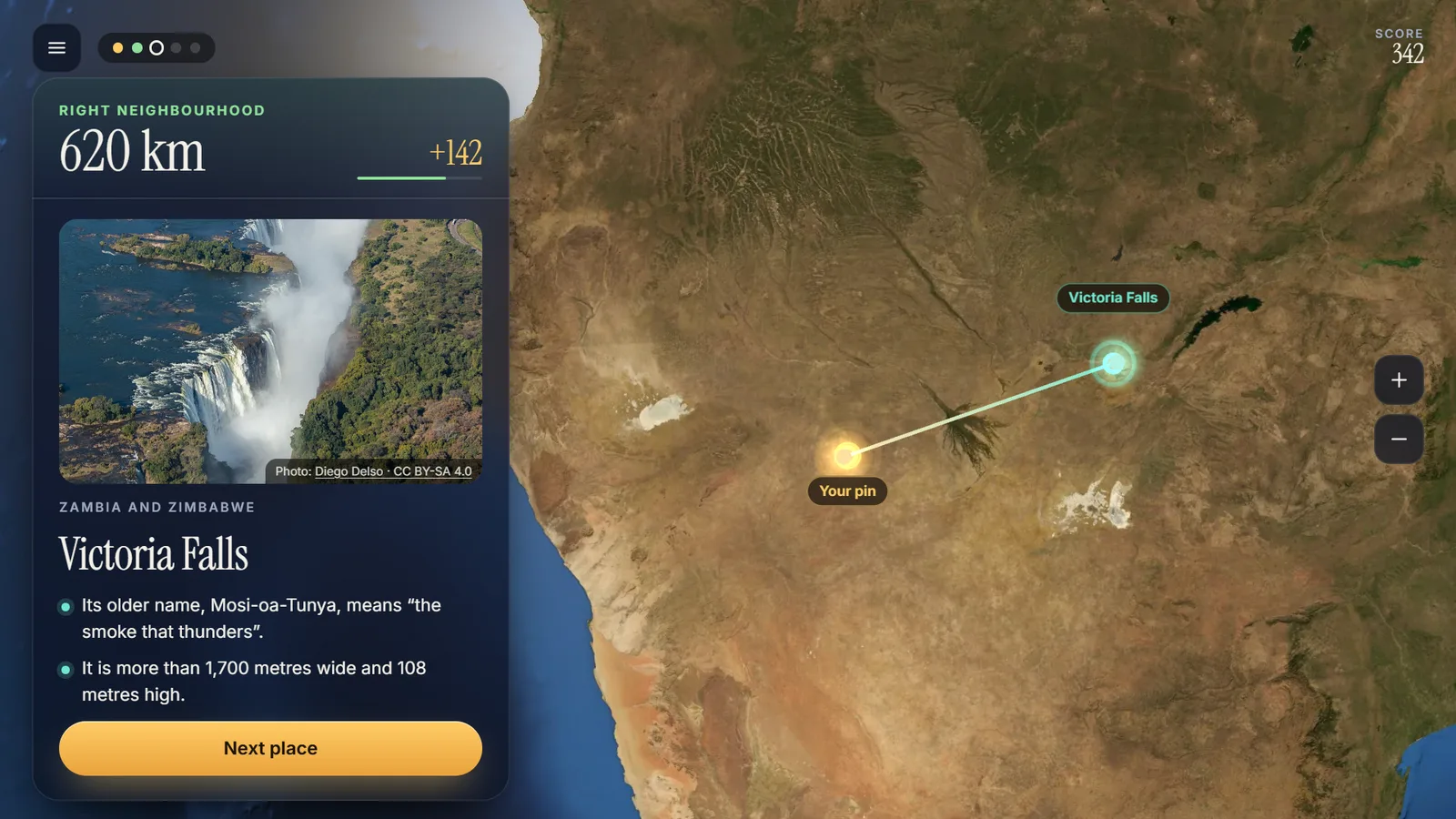
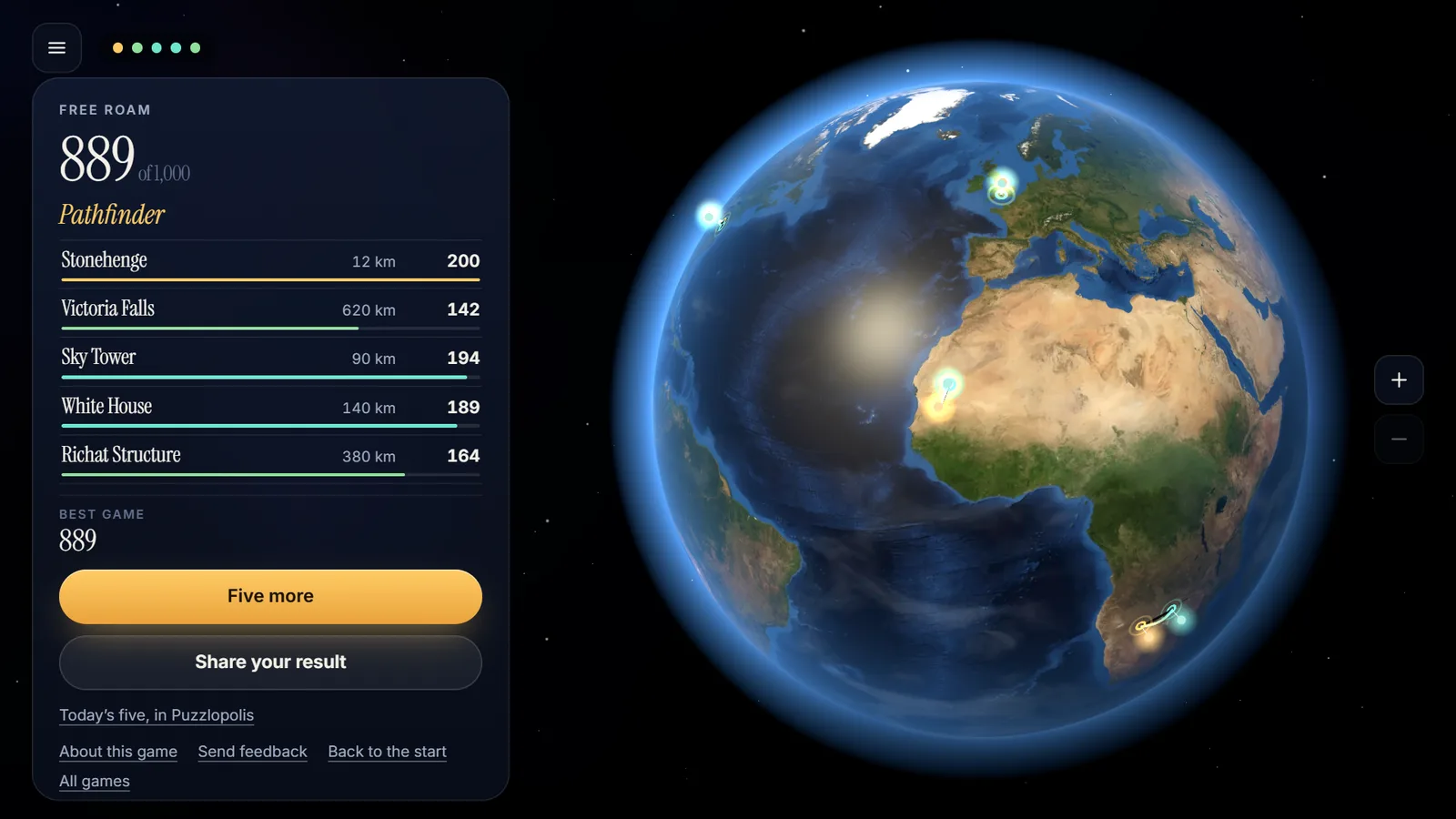
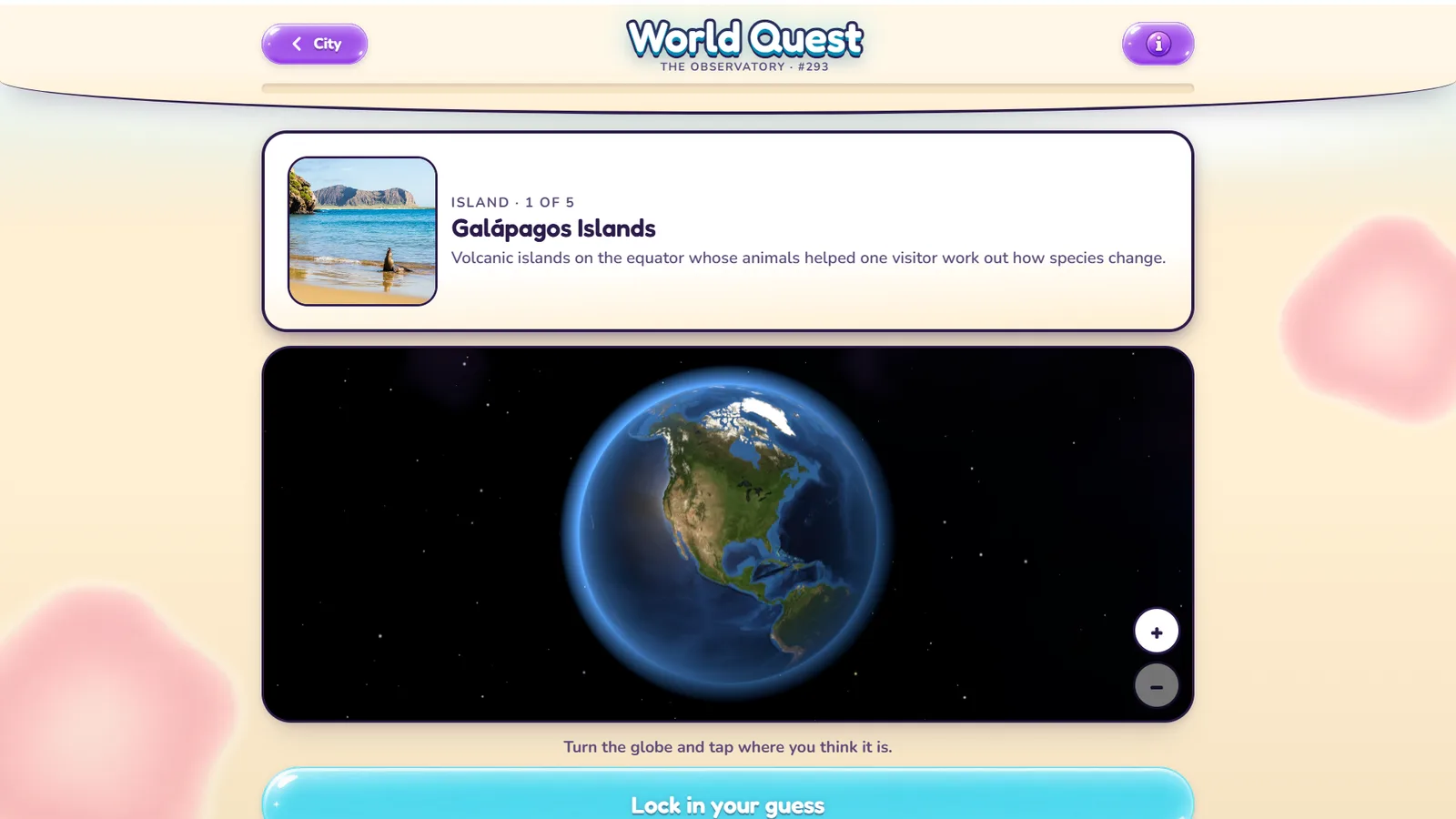
World Quest is a free geography game on a 3D globe: you are shown a place by name and photograph and drop a pin where you think it is on an Earth with no borders and no names. Drag to turn the globe, scroll or pinch to come closer, and tap to drop your pin. Lock it in and the globe shows the real place, draws the shortest way from your pin to it and says how many kilometres off you were.
The globe is one photograph of the Earth from space, with real coasts, mountains and deserts, and sharper pictures load as you come closer. A pin within 40 kilometres earns the full 200 points; past that the score falls away smoothly, so 500 kilometres off still earns about 150, and five places make a game out of 1,000. After each guess you read about the place: three facts written for the game, the opening of its encyclopedia article and a credited photograph. The 150 places range from famous landmarks to points in the open ocean.
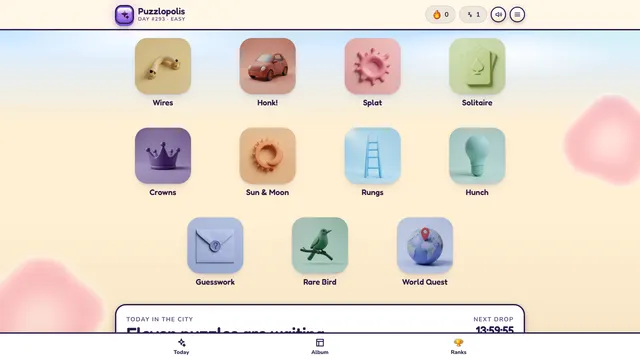
It suits anyone who likes maps, travel or a short quiz. Free roam deals five places from anywhere, as often as you like. Today’s five, the same for everyone, are one of the daily puzzles in Puzzlopolis, where a group started from the home page, with no account, compares the day’s scores; a browser can be in several groups. Your top score is kept in the browser on the device you play on, and the game plays on phones, tablets and computers.
- A photograph of the whole Earth, with no borders or names
- The full 200 points for a pin within 40 kilometres
- 150 places in three tiers, from landmarks to open ocean
- Three facts and a credited photograph after every guess
- Free roam as often as you like, with no sign-up
- Today’s five are also a daily puzzle in Puzzlopolis
How to play World Quest
- Each game is five places. A place is named and shown in a photograph, with one line that says what it is without saying where.
- Turn the globe and come in closer to look at the coasts, the mountains and the deserts. Nothing is written on it: it is a photograph of the Earth from space.
- Tap the globe to drop your pin. Tap somewhere else to move it, and press “Lock in your guess” when you are happy with it.
- The globe shows where the place really is and draws the shortest way from your pin to it. A pin within 40 kilometres scores the full 200 points, and the score falls away smoothly with distance: about a third of it is left at 2,000 kilometres.
- Then the place is yours to read about: three things worth knowing, the opening of its encyclopedia article, and where on Earth it is.
- Free roam, on this page, deals five from anywhere, as often as you like. Today’s five, the same for everyone, are one of the daily puzzles in Puzzlopolis, played on the same globe.
Controls
- Touch
- Drag to turn the globe, pinch to come closer, tap to drop or move your pin.
- Mouse
- Drag to turn the globe, scroll to come closer, click to drop or move your pin.
- Keyboard
- The arrow keys turn the globe, + and − change the distance, Space drops your pin in the middle of the view, Enter locks in your guess, Esc opens the menu.
Questions about World Quest
What is World Quest?
World Quest is a free geography game on a 3D globe: you are shown a place by name and photograph and drop a pin where you think it is on an Earth with no borders and no names. Drag to turn the globe, scroll or pinch to come closer, and tap to drop your pin. Lock it in and the globe shows the real place, draws the shortest way from your pin to it and says how many kilometres off you were.
How long does World Quest take to play?
About 3 minutes for a game of five places.
Is the World Quest video real gameplay?
Yes. The video on this page is 0:35 of World Quest really being played, recorded from the game itself, played in a web browser with the same mouse and keys a player uses, and cut only to skip loading and waiting.
How is the score worked out in World Quest?
By distance alone. The server measures the shortest way over the Earth’s surface from your pin to the place: within 40 kilometres is the full 200 points, 500 kilometres is about 150, 2,000 kilometres about 60, and the far side of the world is nothing. Five places make a game out of 1,000. In Puzzlopolis, where today’s five are one of the daily puzzles, a place is worth what that day’s puzzles are: up to 120, 200 or 320.
Why are there no borders or names on the globe?
Because finding a place without them is the game. The globe is one photograph of the Earth from space, with its real coasts, mountains, deserts and sea floors, and nothing drawn on top.
How many places are there?
One hundred and fifty, from landmarks most people could point to, to islands and deserts almost nobody could. Each day asks two of the easier ones, two harder and one from the far corners, and no place comes round again for thirty days.
Where do the photographs and the facts come from?
The three things worth knowing about each place are written for the game. The opening paragraph and the photograph come from Wikipedia and Wikimedia Commons, with their authors and licences credited beside them, and the globe is NASA’s Blue Marble.
Is my progress saved?
Yes, in your browser on the device you play on: your best game here, and today’s five in Puzzlopolis as far as you have played them. Your guesses are sent to the server to be measured and are not kept there.